The Evolution of Darts
From medieval battlefields to brightly lit modern arenas.
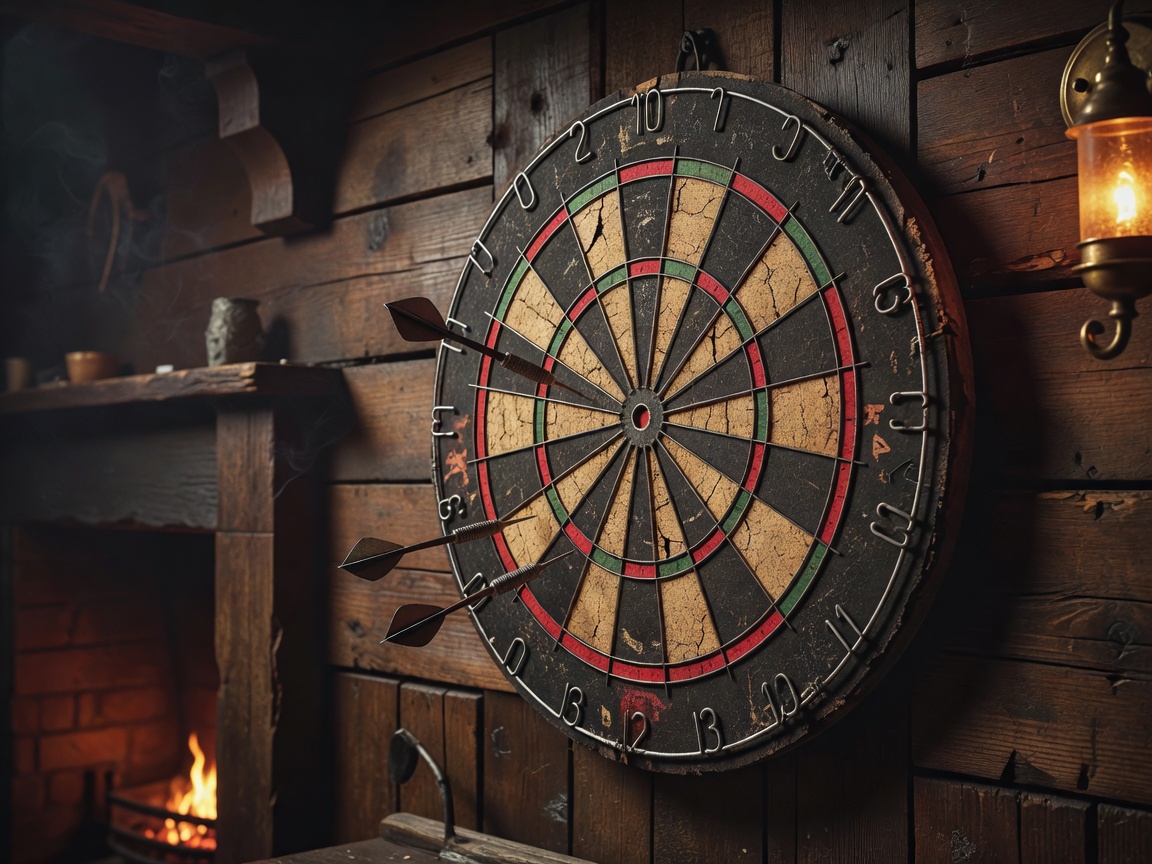
The journey of darts from a crude medieval pastime to a multi-million-pound global sporting spectacle is a fascinating study of cultural evolution. What is today played in sold-out arenas across Europe originated in the cold, damp winters of medieval England.
Medieval Origins
Historians generally agree that darts began as a military training exercise. During the medieval period, English archers were feared across Europe for their skill with the longbow. During harsh winter months, when practicing archery outdoors was impractical, soldiers took to throwing shortened arrows or crossbow bolts at the cross-sections of felled tree trunks inside barns and taverns.
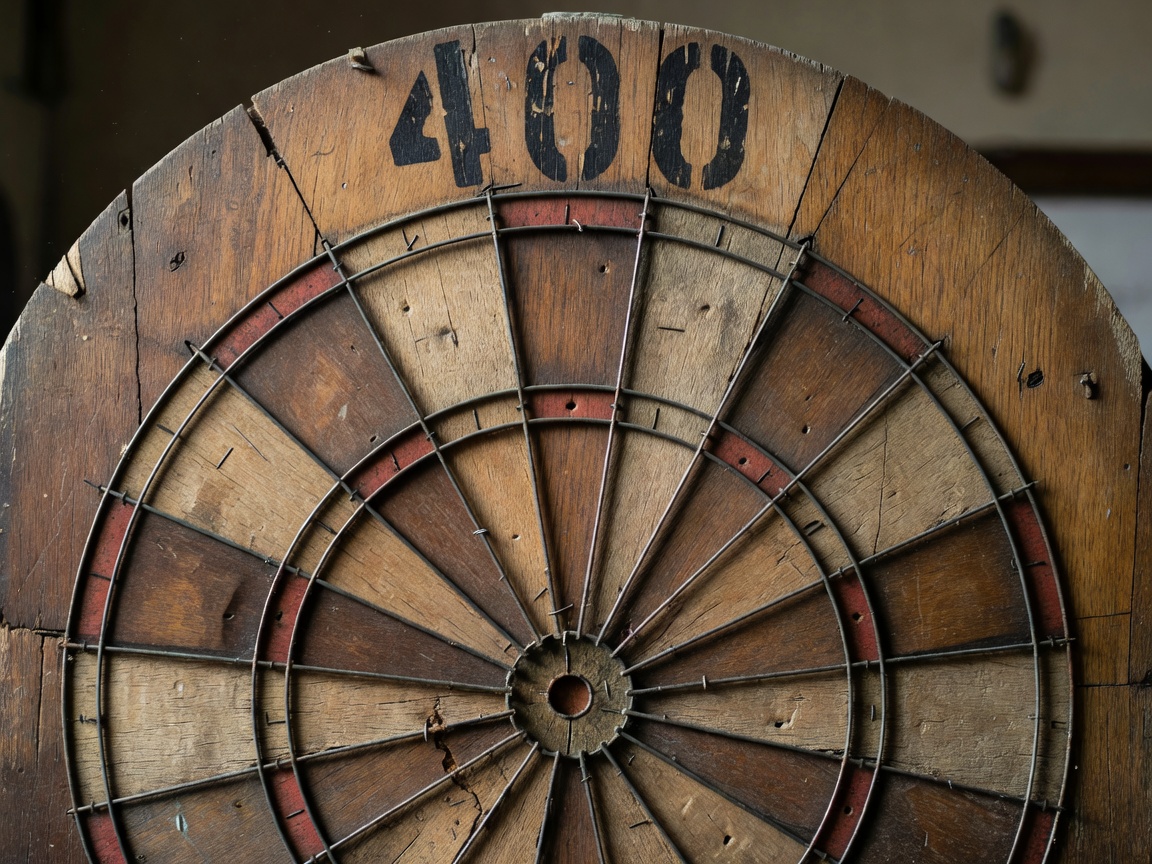
The natural radial cracks in the drying wood formed the initial "segments," while the central growth rings provided the "bullseye." Over time, this military exercise evolved into a competitive pub game. The transition from thick tree trunks to elm boards, and eventually to the modern sisal bristle board, allowed the game to become standardized.
The Numbering System
One of the most brilliant aspects of darts is the seemingly random arrangement of the numbers on the board. The credit for this layout is historically attributed to a carpenter from Lancashire named Brian Gamlin, who allegedly devised the sequence in 1896.
The genius of Gamlin's numbering system is that it ruthlessly punishes inaccuracy. High numbers are deliberately placed next to very low numbers. The coveted 20 is flanked by a 1 and a 5. The 19 is bordered by a 3 and a 7. This arrangement mathematically ensures that a player cannot rely on luck; throwing blindly into a general area will inevitably yield a poor score. It forces players to exhibit fine motor control and absolute precision.
The "Game of Skill" Ruling
In the early 20th century, legislation in England banned games of chance from being played in public houses. In 1908, a pub owner in Leeds was taken to court and charged with allowing darts—which magistrates deemed a game of chance—to be played on his premises.
Legend has it that the pub owner enlisted the help of William "Bigfoot" Anakin, the best darts player in the region. In the courtroom, a dartboard was hung on the wall. Anakin proceeded to throw three darts directly into the single 20 segment. The magistrate then challenged a court clerk to replicate the feat; the clerk naturally failed, scattering darts across the board. Anakin then threw three darts into the double 20. The magistrate was thoroughly convinced, ruling that darts was definitively a "game of skill," cementing its legal status in British pubs forever.
The Modern Split: BDO vs. PDC
For decades, the British Darts Organisation (BDO) was the governing body of the sport, bringing it to television prominence in the 1970s and 1980s. Players became working-class heroes, and the game reached massive audiences.
However, by the late 1980s, television coverage dropped dramatically, and sponsorship money dried up. The top professional players felt the BDO was not doing enough to secure the sport's financial future. In a pivotal moment in 1992, sixteen top players broke away from the BDO to form their own organization, which would eventually become the Professional Darts Corporation (PDC).
This schism shaped the modern landscape of the sport. While the BDO struggled and eventually went into liquidation in 2020, the PDC revolutionized darts. By introducing walk-on music, dramatic lighting, explosive crowd participation, and massive prize funds, the PDC transformed darts into a premier entertainment product, ensuring its status as a permanent fixture on the global sporting calendar.